How to Choose Motorcycle Gear for Alberta’s Climate: A Practical Guide
This site is not affiliated with any motorcycle manufacturer or brand.
All brand names mentioned are used for descriptive and informational purposes only.
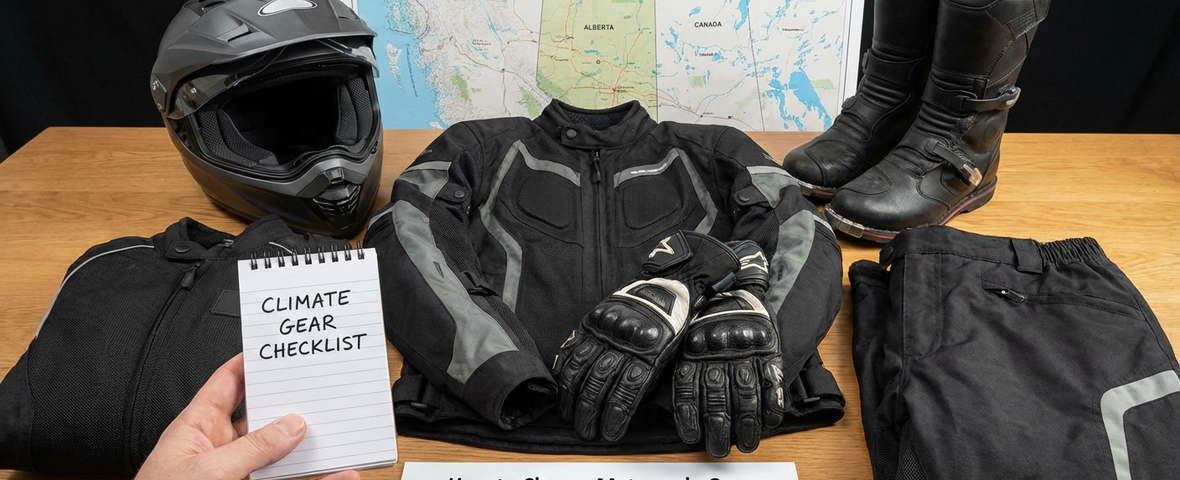
Riding in Alberta brings unique joys – sprawling landscapes, long highways, and open-air freedom – but the province’s weather extremes and collision risks make choosing the right motorcycle gear especially important. This guide focuses on safe, climate-aware gear choices that help riders stay comfortable and protected year-round.
Alberta Climate at a Glance
Alberta’s climate is continental, meaning wide temperature swings are common and seasonal conditions vary rapidly. In cities like Calgary, average winter lows in January range between about -12 °C (10 °F) and -2 °C (28 °F), while summer highs in July can reach 24 °C (75 °F) or more. Rural and northern areas may see even more extreme lows in winter. Alberta also experiences significant dryness, especially in southern regions, which encourages rapid warming during the day and cool nights – important considerations when choosing gear layers.
Typical riding season:
- Spring: changeable and cool
- Summer: warm days with strong sun
- Fall: fast temperature drops
- Winter: generally unsuitable for recreational riding
Motorcycle Safety in Alberta – What the Data Says
Motorcycle collisions are a clear safety concern in Alberta:
- In 2024, Royal Canadian Mounted Police (RCMP) recorded 235 motorcycle crashes with 204 injuries and 26 fatalities.
- In 2023, Calgary alone saw 5 fatal motorcycle collisions and 104 injury collisions.
- Motorcycle/scooter vehicles represented about 10.2 % of fatal or major injury collisions in Alberta overall, despite being a small fraction of total registered vehicles.
These statistics highlight that protective gear is not optional; it can make a real difference in outcomes when crashes occur.
Major Motorcycle Dealership Networks in Canada
As of December 24, 2025, Harley-Davidson operates 47 dealerships across Canada, spanning 9 provinces and territories and serving riders in 46 cities. This footprint shows a strong concentration in a few key provinces, with availability closely tied to population density and long-established riding communities.
National Overview (at a glance)
- Total dealerships: 47
- Provinces & territories covered: 9
- Cities served: 46
- Largest provincial share: Quebec (≈30%)
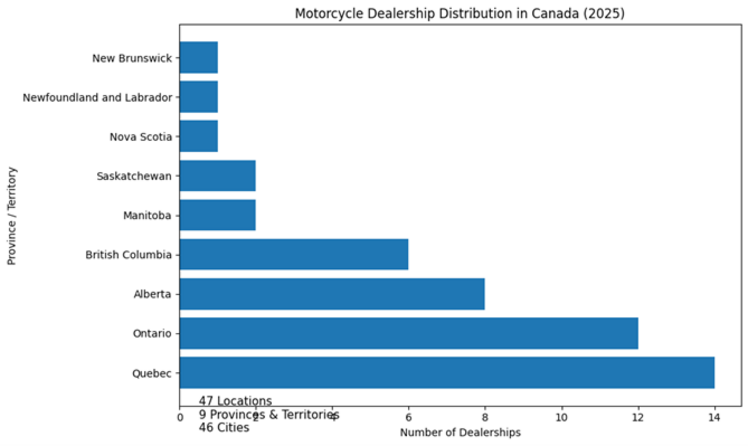
Dealership distribution by province
Quebec leads the country with 14 dealerships (30%), followed by Ontario with 12 (26%) and Alberta with 8 (17%). Together, these three provinces account for nearly three-quarters of all locations nationwide. Alberta stands out for accessibility, offering one dealership per ~543,250 people, the best ratio among major provinces listed.
Where dealerships are concentrated
Province / Territory | Dealerships | Share of Total | Population | People per Dealership |
Quebec | 14 | 30% | 8.43M | 602.36K |
Ontario | 12 | 26% | 14.45M | 1.20M |
Alberta | 8 | 17% | 4.35M | 543.25K |
British Columbia | 6 | 13% | 5.02M | 836.67K |
Manitoba | 2 | 4% | 1.36M | 680.00K |
Saskatchewan | 2 | 4% | 1.17M | 584.00K |
Nova Scotia | 1 | 2% | 965.00K | 965.00K |
Newfoundland and Labrador | 1 | 2% | 524.00K | 524.00K |
New Brunswick | 1 | 2% | 772.00K | 772.00K |
Why Gear Matters Before Style
Riders sometimes search for personalization and style elements using terms like stickers Harley Davidson, Harley Davidson sticker, stickers Harley, Harley Davidson stickers large, autocollant Harley Davidson, Harley logo skull, holley skull logo, logo Harley Davidson skull and Harley Davidson skull logo – but visibility, certification, and fit are the real safety priorities. Graphic preferences are fine for customizing helmets and gear, but never at the expense of safety features like reflective panels or proper ventilation.
Helmet – Your Most Critical Gear
A helmet is the most essential piece of safety equipment for any rider.
What to prioritize:
- Certified safety rating (check provincial helmet standards)
- Adjustability for a snug, wind-blocking fit
- Good ventilation for summer heat and cool-weather airflow
- Pinlock or anti-fog inserts for condensation control
Helmet choices based on looks (e.g., terms like logo Harley skull, Harley skull) should always take a back seat to protection.
Jackets – Layering Is Key
Because Alberta temperatures can change dramatically during a ride, layering gear beats one heavy jacket.
Recommended jacket features:
- Abrasion-resistant outer shell
- Removable thermal liner for cold mornings
- Windproof panels to reduce chill
- Adjustable cuffs/waist to trap heat
During a long spring or fall day, a layered approach keeps you comfortable from cool morning to warm afternoon without overheating.
Pants – Wind and Impact Protection
Even on dry roads, wind can whip up debris and lower body temperature quickly.
Look for:
- Wind-blocking panels
- Armor at knees/hips
- Over-pants with full side zips (easier on/off)
- Space for base layers
Thermal leggings help but should not replace structural protection.
Gloves – Never One Pair for All Seasons
No single glove type works year-round in Alberta.
Suggested setup:
- Ventilated gloves for summer heat
- Water-resistant/insulated gloves for cooler months
- Optional heated liners for shoulder-season mornings
Cold hands can significantly slow reaction times, so choose protection carefully.
Boots – Ride Stable, Stay Comfortable
Foot protection is about more than comfort – it’s about pedal control and injury prevention.
Essential boot features:
- Good ankle support
- Non-slip soles
- Enough space for socks without compromising fit
Durable boots with ankle protection help reduce injury risk in a fall.
Table: Gear Functions Across Alberta’s Typical Weather
Weather Condition | Gear Priority | Why It Matters |
Cool Springs | Layered Jacket + Insulated Gloves | Warm mornings & cool evenings |
Hot Summers | Ventilated Helmet + Mesh Jacket | Heat dissipation and airflow |
Windy Plains | Windproof Panels + Boots | Reduces wind chill and fatigue |
Fall Transitions | Removable Liners + All-Weather Gloves | Adapt to rapid temperature drop |
Seasonal Riding Conditions and Gear
Alberta’s riding seasons change quickly, and each part of the year brings its own mix of temperatures, road conditions, and gear requirements.
Spring
Temperatures vary widely – from near freezing to mild warmth – so layering gear with removable liners is essential. Beware of early rain and wind chill.
Summer
Although average July highs range from about 20°C to the mid-20s°C, heat can spike into the 30s, especially inland. Proper ventilation prevents overheating on long rides.
Fall
Cool mornings and evenings mean gear must adapt quickly. Reflective panels help with early dusk visibility.
Shoulder Seasons & Transitions
Temperatures near freezing require heated layers and robust wind blocking to prevent rider fatigue.
Rural Roads, Visibility & Smart Choices
Many motorcycle fatalities occur on rural highways and secondary roads – areas where visibility and rough surfaces add risks. Strong winds, wildlife crossings, and changing light angles all test gear performance. Safe gear choices – prioritizing impact protection, weather adaptability, and visibility – help reduce exposure to these seasonal hazards.
Installing and Caring for Gear
A well-fitted piece of gear protects better and lasts longer.
Tips for care:
- Wash liners separately to maintain insulation
- Inspect armour and stitching before long rides
- Replace cracked visors before every season
- Store gear dry to avoid mildew
Practical Accessories That Matter
Rather than chasing fashion terms like Harley Davidson watch, choose accessories that actually enhance riding comfort:
- Neck gaiters for wind protection
- High-visibility vests
- Hydration pack for long tours
- Compact rain shell for quick showers
These items do more to improve riding experience than superficial add-ons.
Alberta’s geography and climate create wide ranges of temperatures and riding conditions. Real gear effectiveness isn’t about logos or decorative elements – it’s about how well equipment responds to heat, wind, cold, and road hazards.
Proper helmet choice, layered protection, weather-responsive clothing, and strategic accessories improve both comfort and safety for Alberta riders. If statistics show anything, it’s that real risks exist – and gear decisions matter.